









Water Story

Minerals

The Best Inorganic Nutrients for Our Body

#Minerals

What Are Minerals?

Minerals are one of the five major nutrients that make up living organisms.
They are inorganic nutrients composed of elements other than oxygen, nitrogen, hydrogen, and carbon, and are essential minerals that must be supplied from outside the body because they cannot be synthesized internally.

Maintaining pH Balance

The ideal pH level for the human body is closest to neutral and should be maintained between pH 7.2 and 7.6.
Continuously drinking water that is too acidic or too alkaline may disrupt the body's balance and increase the risk of exposure to various diseases.

  • Acidic
  • Neural
  • Alkaline
  • Lactic acid juice 1.8~2.0 Cola 2.5 Beer 4.0 Coffee 5.0
  • JINHAENG WATER 7.4 Milk 7.0~7.5 Purified water 6.3~7.0
  • Baking soda 10.5 Stomach medicine 12.3 Drain cleaner 14
Minerals
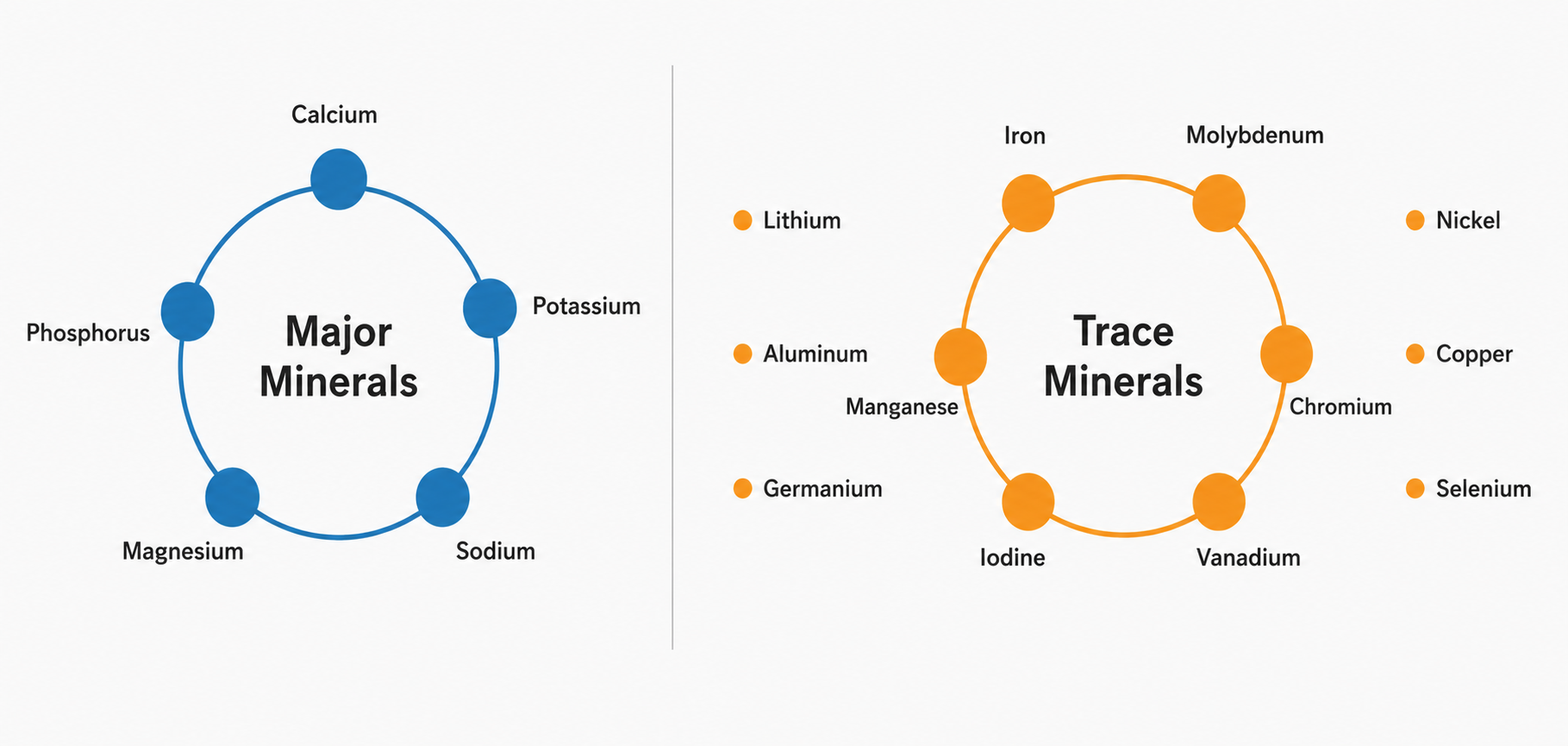
Among the 110 elements that exist on Earth, all elements excluding oxygen (65%), carbon (18%), hydrogen (10%), and nitrogen (3.5%), which make up 96.5% of the human body, are classified as the remaining 3.5% (calcium 1.5%, phosphorus 1%, and other elements 1%).

Essential Nutrients for Sustaining Life

Minerals are one of the five essential nutrients required for sustaining life in the human body, playing important roles in body growth and maintenance, as well as regulating various physiological functions and tissues.
Calcium, iron, sodium, potassium, and magnesium are all examples of minerals.

Types and Roles of Minerals

Minerals can be divided into inorganic minerals and organic minerals.

Inorganic minerals refer to minerals that exist naturally in the air, water, soil, and rocks,
while organic minerals refer to minerals contained in plants that absorb inorganic minerals.

  1. Ca Calcium
    The most abundant mineral in the body, essential for bone and tooth formation, muscle contraction, and mental stability.
  2. Mg Magnesium
    Helps calcium function properly, prevents cardiovascular disease, constipation, and fatigue, and supports oxygen activation.
  3. Na Sodium
    Abundant in body fluids, helps regulate nutrient distribution and promotes metabolism.
  4. K Potassium
    Works together with sodium to maintain body fluid balance, supports nerve transmission, and helps suppress hypertension caused by excessive sodium.
  5. Se Selenium
    An essential mineral for hair growth and skin regeneration, acts as an antioxidant, and helps prevent aging and aging-related diseases.
  6. Zn Zinc
    Helps activate metabolism and hormones, supports skin and immune health.

Rare Elements

  • Cr³⁺ Chromium 3
    hromium 3
    Helps insulin deliver blood sugar into cells and assists in lowering cholesterol levels.
  • Sr Strontium
    Strontium
    Similar to calcium, it accumulates in bones, promotes bone growth, and helps strengthen bones.
  • La Lanthanum
    Lanthanum
    Improves hyperlipidemia by enhancing cellular functions.
  • Ge Germanium
    Germanium
    Promotes metabolism in the human body, activates immune cells, and helps supply oxygen and antioxidant effects.

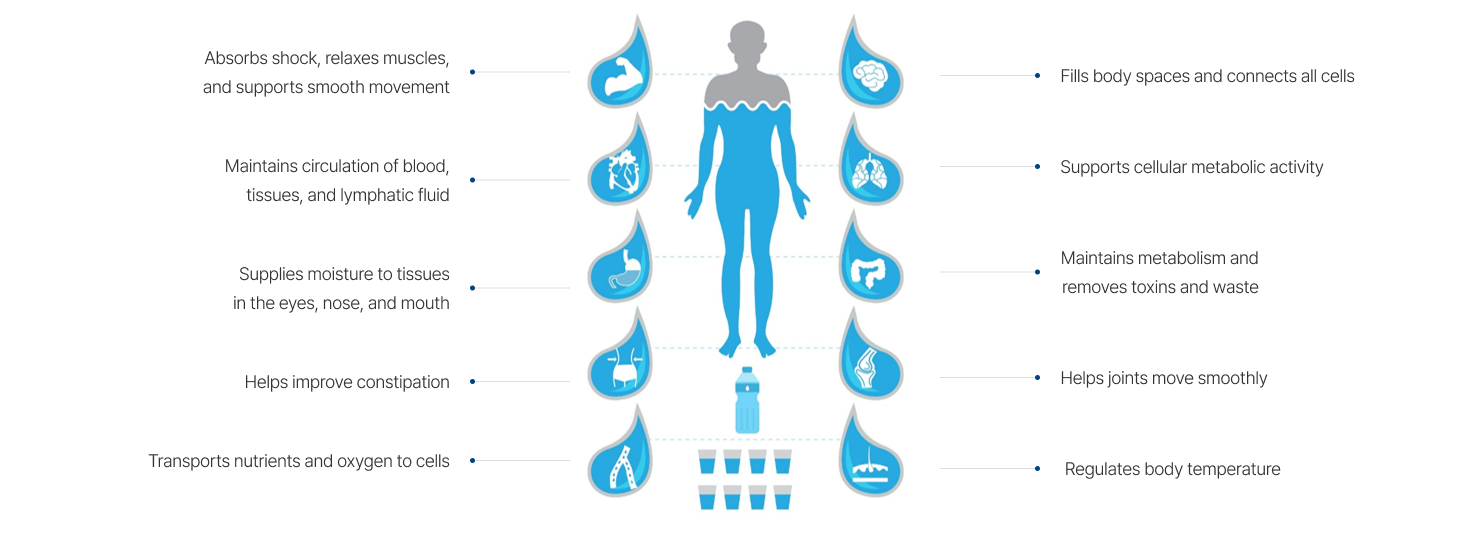
Key Roles of Healthy Minerals in the Human Body

Mineral Deficiency

When river water or seawater evaporates, it becomes pure water vapor, and through the natural water cycle, various minerals are absorbed into the water.
Although people can absorb many minerals from water, one-third of the world's population suffers from mineral deficiency.

Why Are People Suffering from Mineral Deficiency?

Minerals in Water Viewed Through Media

Frequently Asked Questions

A
Minerals in water cannot completely replace the minerals found in food. However, ionic minerals in water are absorbed by the body more quickly than minerals from food. Therefore, water serves as an important source of mineral supplementation alongside vegetables and fruits.
A
Yes. The taste of water varies depending on the soil, climate, and temperature. Heavy water tends to contain more minerals, while lighter water contains fewer minerals.
A
In Korea, drinking water is permitted from pH 5.8 (weakly acidic) to pH 8.5.